



Digicel Haiti is transforming the telecommunications landscape on the Caribbean nation. CEO, Jean Philippe Brun, tells us more about how the company is facilitating togetherness for Haiti.
THE HAITIAN CONNECTION
The fascinating and ever-fluctuating field of telecommunications (telecoms) forms the global backbone of modern communication, providing essential voice, data, and internet services via fiber optics, radio networks, and satellites.
Digicel Haiti (Digicel) aims to create what it calls “real connections” – bonds between people that help them live their day-to-day lives through their work, education, and relationships with loved ones.
“Our role goes well beyond simply providing data, SMS, or voice services, which are the basic expectations of a telecoms operator. Instead, our purpose is to bring people together and be a genuine, contributing part of the communities we serve,” introduces Jean Philippe Brun, CEO.
That sense of connection and community is what defines Digicel today.
The telecoms sector poses a constant slew of challenges and is one that continues to excite Brun greatly.
“At its core, it’s a technology-driven industry, and technology is constantly evolving. Over the years, we’ve moved from offering basic voice and SMS services to launching data, 3G, and long-term evolution (LTE) in Haiti,” he divulges.
“We’ve also introduced mobile financial services and were among the Caribbean pioneers of electronic recharge.”
While many prepaid markets around the region still rely heavily on scratch cards, which requires a high level of logistics management, Digicel Haiti is now approximately 99 percent electronic.
These kinds of innovations, which are now considered the norm for the market highlight how the company continues to transform itself to find new and better ways of operating.
A JOURNEY THROUGH THE INDUSTRY
A native of Haiti, Brun’s vast and varied career in telecoms spans nearly 20 years in a variety of roles.
After finishing school in Pittsburgh, US, he attended Duquesne University, where he studied supply chain management and finance.
“Shortly after graduating, I was preparing to start a new role in South Florida when I received a call from the Director of Sales at Comcel, a Haitian telco later acquired by the Digicel Group in 2012,” he recalls.
“They asked me to support their logistics operations in Haiti. Digicel had just launched there and the company was looking to reinvent itself to stay competitive. This opportunity allowed me to return to Haiti, which I was very excited about, so I accepted immediately.”
In 2012, after joining Digicel, Brun’s focus shifted more toward the consumer sales side of the business.
From there, he held several commercial roles across products, mobile financial services, and consumer sales, before becoming CCO in 2018 and COO the following year.
“Ultimately, I was appointed CEO in 2021 and have held that role ever since”.
Moreover, when the Digicel Group entered Haiti, there were already high expectations. However, the speed at which things have transformed has far exceeded those initial expectations.
“At launch, the expectation was to reach one million subscribers within five years – the company achieved that milestone within just one year and, soon after, grew to the millions we know today,” he elaborates.
“While the vision and ambition were certainly there from the start, the pace of growth dramatically surpassed what anyone in the market had anticipated.”
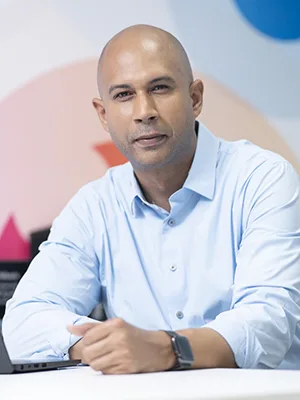
“Our role goes well beyond simply providing data, SMS, or voice services, which are the basic expectations of a telecoms operator. Instead, our purpose is to bring people together and be a genuine, contributing part of the communities we serve”
Jean Philippe Brun, CEO, Digicel Haiti
GEOGRAPHIC VOLATILITY
If there is one defining characteristic of the telecoms industry in Haiti, it is the exceptionally high level of volatility.
Haiti is a severe multi-hazardous environment where over 96 percent of the population is at risk from two or more hazards, primarily earthquakes, tropical storms, and landslides.
The nation is located on a major plate boundary, making it susceptible to earthquakes and tsunamis, and positioned within the Caribbean hurricane belt.
“Since joining Digicel, we have also experienced significant currency fluctuations, increasingly challenging security conditions, periods of social unrest, and the impacts of constant environmental change,” highlights Brun.
Undoubtedly, Haiti is unique within the Caribbean in terms of the intensity and frequency of these tough challenges.
“Over the past seven to eight years in particular, we have had to adjust our operations dramatically and continuously in response to this changing environment.
“This level of volatility is markedly different from what we see across the rest of the region, where markets tend to be more stable and predictable,” he expands.
BACK STRONGER
The fast-changing nature of the telecoms landscape keeps everyone on their toes – environments change, countries evolve, and consumer expectations continue to grow.
As a result, the likes of Digicel must continuously reinvent themselves to meet those customer demands while navigating the realities of the operating environment.
First and foremost, the company’s number one focus is always safety – in everything it does throughout the nation’s gradual rebuilding process, the safety of its employees, contractors, and partners comes before anything else.
“We work closely with a number of security companies to assess different geographical areas and determine where it is safe to rebuild as conditions gradually improve,” Brun outlines.
That said, Digicel is still in a situation where there is a long way to go in the country, as there have been significant impacts over the past couple of years.
However, the company remains very pleased with the direction it is moving in.
“More infrastructure is being rebuilt and brought back on air, and we are also strengthening resilience across the network so that we can reduce future impacts as we move forward,” he assures.
TRANSFORMATION FOR THE NATION
When evaluating the impact Digicel has had across Haiti, it’s important to start with how its journey began.
The company launched in 2006 and has fundamentally revolutionised the telecoms sector.
At that time, telecoms services were largely accessible to just a small, elite segment of the population – a landscape Digicel has changed by transforming telecoms into a true mass‑market service.
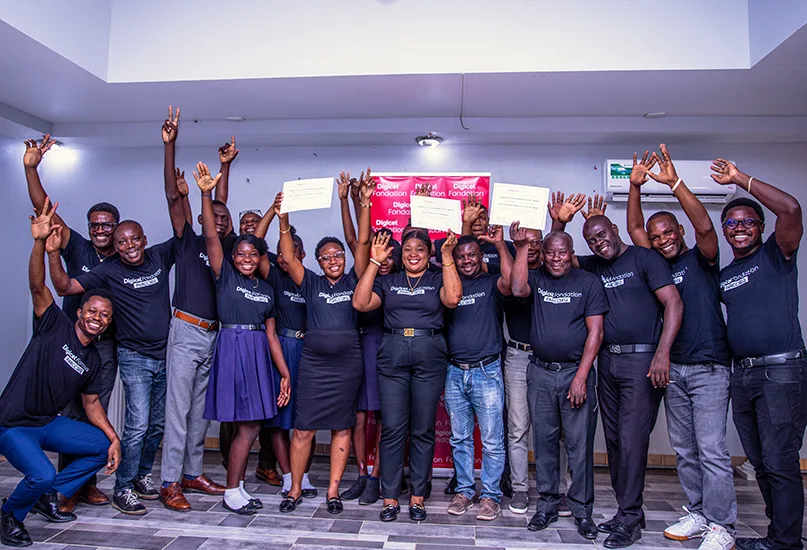
“Prior to our launch, Haiti had fewer than half a million subscribers in a country of nearly 12 million people. Since then, we’ve helped bring telecoms and other digital services to millions of Haitians, a milestone we are extremely proud of,” Brun prides.
Beyond traditional voice and data services, Digicel has played a pivotal role in launching mobile financial services in Haiti, with a strong focus on financial inclusion.
“Today, our mobile financial services platform MonCash with over 6,000 agent locations nationwide which support close to two million accounts; many of which belong to individuals who were previously unbanked. Enabling this level of financial inclusion has been a major achievement for the company,” he tells us.
RESILIENCE AND LEGACY
Looking ahead, Digicel’s number one priority is resiliency above all else.
“We are continuing to invest heavily in our network to build greater capacity and continuity, ensuring we can meet our customers’ growing needs,” Brun sets out.
Despite the broader challenges facing Haiti, the company continues to see rising demand for both data and voice services, as well as sustained growth in its mobile financial services business.
“Our focus is on making sure external environmental challenges do not become barriers for our customers. Instead, we aim to design our network and services in a way that allows us to work around these obstacles and ensure customers can continue to connect, communicate, and transact in the ways that matter most to them,” he reveals.
Operating in a country like Haiti, Digicel places strong importance on ethics, governance, and compliance as core pillars of the business.
The company has strict compliance standards aligned with both local regulations and best international practices, supported by internal controls, supplier due diligence, and anti-corruption policies. Employees are trained regularly in ethical conduct, data protection, and customer privacy.
Brun believes Digicel’s enduring legacy – what it has been, what it is today, and what he hopes it continues to be for many years to come – is that it has built something far greater than a traditional telecoms operator.
“We have created a network and company that form an essential part of Haiti’s national infrastructure and are integral to people’s everyday lives.
“The past couple of years have really been about grit and determination for us. Given the broader security situation in the country, we’ve faced some real challenges, but it has remained clear that we need to keep investing – and make sure those investments genuinely strengthen the network for our customers and the country as a whole,” Brun assesses.
“We have created a network and company that form an essential part of Haiti’s national infrastructure and are integral to people’s everyday lives”
Jean Philippe Brun, CEO, Digicel Haiti
ADAPT AND OVERCOME
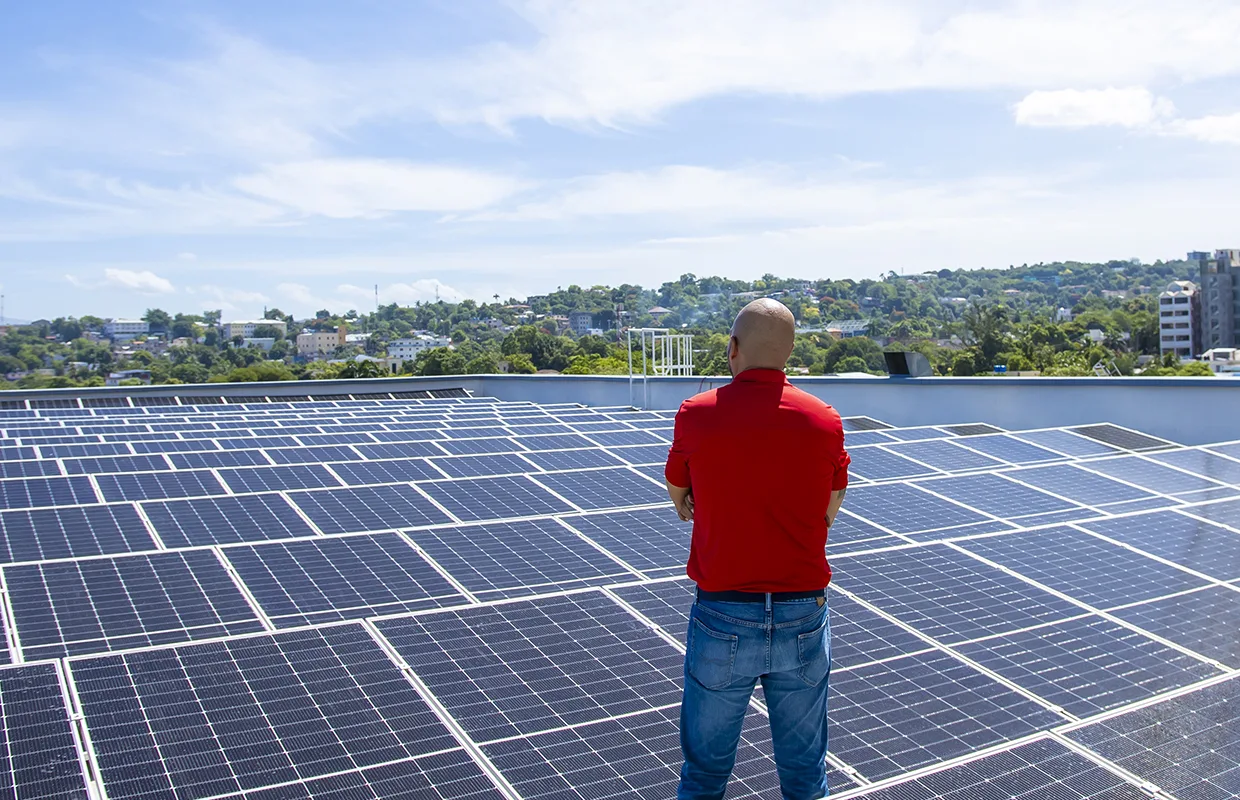
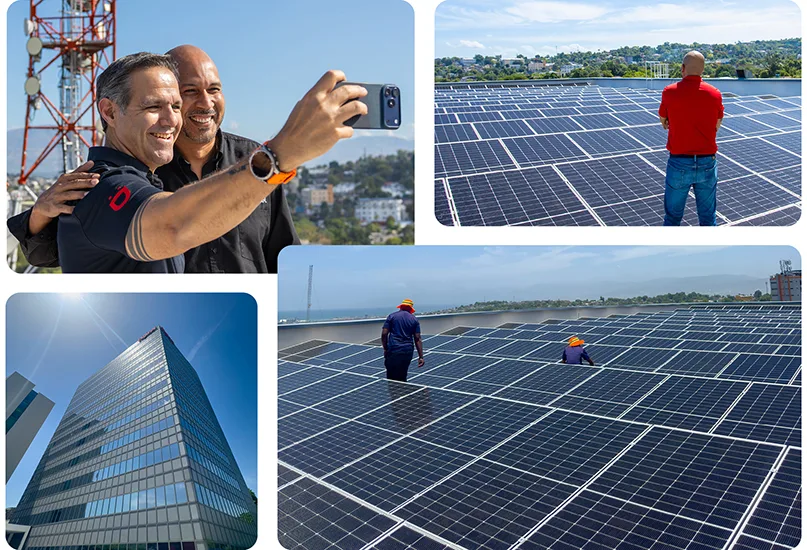
Over the past year alone, Digicel has rolled out 125 solar-powered sites to significantly reduce its reliance on fuel, which has become increasingly difficult to transport.
The company has also solarized its headquarters which houses its main data center as part of that same effort to lower fuel dependency.
“On the network side, we’ve built hundreds of additional kilometers of fiber, improving both redundancy and capacity to meet rapidly growing data demand,” Brun acclaims.
“At the same time, we’ve upgraded over 200 sites with our latest technology – Massive MIMO, an advanced evolution of 4G – and that roll-out is continuing as we move into next year,” he affirms.
Digicel is extremely proud to keep investing, strengthening resilience, and building a network that can support its customers both now and into the future.
“We’ve faced quite a few challenges, whether it’s currency pressures or, more recently, major logistical constraints that affect our operations. With the ongoing security crisis, some national roads have been completely cut off, and movement has become much more difficult,” Brun notes.
As a result, Digicel had to find creative ways to keep both the network running and customers connected every day.
For example, the company uses barges to transport fuel trucks by water to bypass blocked roads.
In certain areas, it has also relies on smaller vehicles – motorcycles and light trucks – for easier access, while in some hard-to-reach locations, it even uses donkeys and horses to get people and equipment to sites. Whatever it takes to keep their customers connected, the company will find.
“Alongside these day-to-day operational adaptations, we’re looking to reduce our exposure to the factors that make operations harder.
“That’s why we’ve invested heavily in solar infrastructure across the country and will continue to do so going forward – so we can lower our dependence on transport and movement as much as possible and provide more reliable service for our customers overall,” Brun expresses.
INVESTING IN THE FUTURE OF HAITI
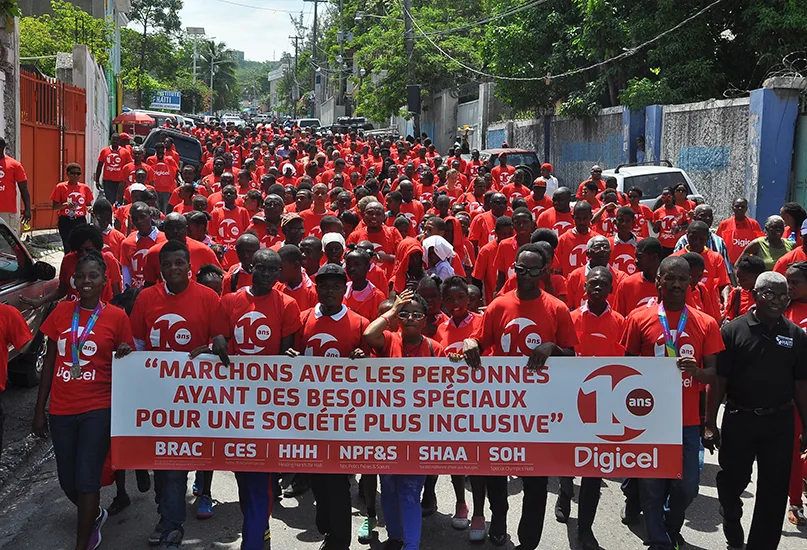
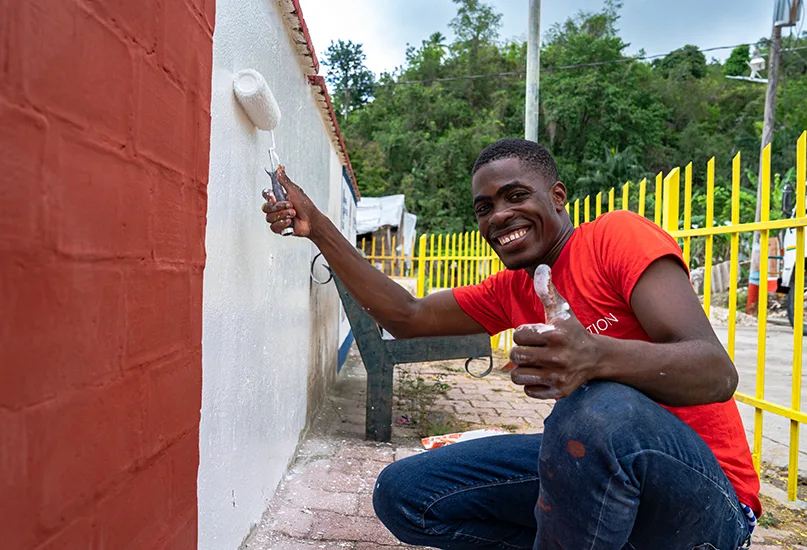
Beyond its core business activities, it is also important to highlight the work of the Digicel Foundation, through which the company has made substantial social investments in Haiti with a strong focus on education, community grants, and partnerships with local and international organisations, such as the Special Olympics.
“We recently reached an important milestone, launching construction of our 200th school in the country.
“As a result, Digicel is now responsible for school infrastructure that supports more than 60,000 children nationwide – an accomplishment we are incredibly proud of.”
The foundation recently shared a compelling comparison – the number of children now in education because of the schools it has built is equivalent to thirty percent more the population of a territory like the Turks and Caicos Islands, where the Digicel Group also operates.
“There is a great deal we can be proud of, and if I had to describe Digicel in a nutshell, this impact is exactly how I would define who we are,” he enthuses.
From the beginning, it was decided that the best people to drive the foundation were Digicel staff members themselves.
“It was important that communities benefit not only from the financial support of the Digicel Foundation but also the skills, teamwork, and dedication of the company’s extraordinary staff.
“As such, the foundation’s board is constituted primarily of Digicel employees dedicated to making a difference in Haitian communities,” Brun explains.
Additionally, in order to give staff an opportunity to contribute, each employee is afforded paid days off per year to volunteer in the foundation’s activities.
Initiatives appealing to different interests are organized across the country on a regular basis to allow for greater staff participation.
“I’m extremely proud of what we have achieved so far and of the role Digicel continues to play in the lives of so many people,” he smiles.
“More than anything, our 20th anniversary is an opportunity to take a step back and make sure we show our gratitude – first to our employees, but also our customers who have been loyal for so long”
Jean Philippe Brun, CEO, Digicel Haiti

TWO DECADES OF EXCELLENCE
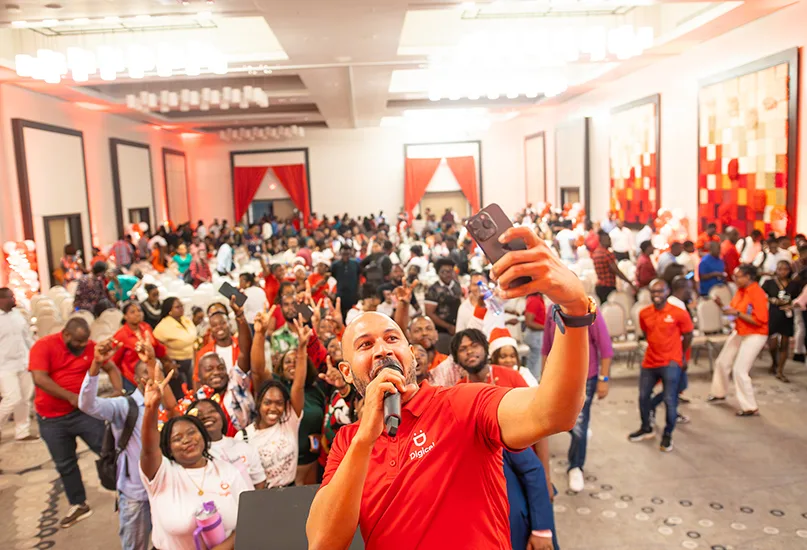
Across 2026, Digicel is celebrating two decades of service in Haiti.
“This is an extremely special milestone for us as no telecoms company in the nation’s history has ever reached 20 years, so this will be a first again,” Brun excites.
“More than anything, our 20th anniversary is an opportunity to take a step back and make sure we show our gratitude – first to our employees, but also our customers who have been loyal for so long,” he adds.
The company has a range of exciting activities and celebrations planned over the next few months to thank everyone who works alongside Digicel, including its employees, customers, partners, and suppliers.
“From the very beginning, we set out to make telecoms services available to the entire Haitian population – something that didn’t exist before.”
That vision has always been manifested by Digicel. Making incoming calls free and devices more affordable were just the beginning. The company was and remains clear that it needs to build itself to address the lower purchasing power across the market.
“All those elements are part of the broader goal of making telecoms accessible to the whole country and, more than anything else, has been our key differentiator,” Brun reflects.
“With that vision comes a real sense of purpose for our people – you see it in everyone who works at Digicel, and it’s a sense of pride they carry every day,” he closes.
DIGICEL HAITI PARTNERS


This company profile was produced by the editorial team at North America Outlook, a publication within the Outlook Publishing global network of B2B industry magazines.
Outlook Publishing showcases organisations and leadership teams shaping sectors including manufacturing, mining, construction, healthcare, supply chains, food production, and sustainability.
North America Outlook highlights organisations driving innovation and industry leadership across North America.